
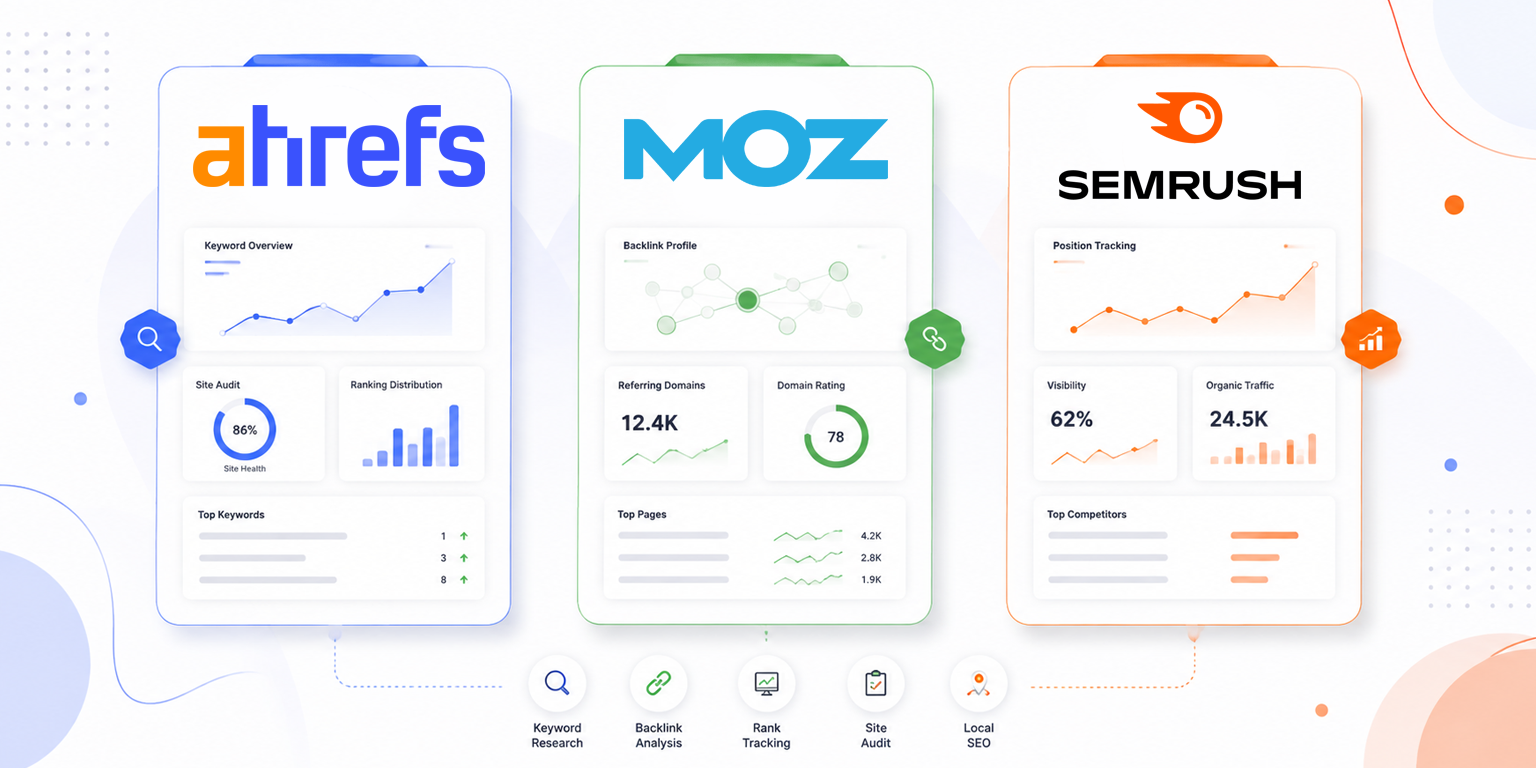
Choosing between Moz, Ahrefs, and Semrush used to be relatively simple. Moz was the familiar starting point, Ahrefs was the backlink tool, and Semrush was the giant marketing suite packed with almost everything.
All three platforms have expanded considerably. Ahrefs now covers technical SEO, keyword research, rank tracking, competitor analysis, content research, web analytics, and AI visibility. Moz has introduced its own AI and GEO features alongside the traditional Moz Pro toolkit. Semrush has continued expanding beyond traditional SEO into competitive intelligence, content, local search, paid advertising, reporting, and AI search visibility.
For a small business paying for only one major SEO platform, the question therefore isn’t simply which tool has the most features.
WebSEO Club Research
These rankings are our editorial assessment rather than measurements published by the platforms themselves. Each platform has enough overlap that the winner changes depending on what work you actually perform.
Quick Overview:
| Category | Our Winner |
|---|---|
| Best all-round SEO platform | Semrush |
| Best backlink research | Ahrefs |
| Best competitor SEO research | Ahrefs / Semrush |
| Best keyword research | Semrush / Ahrefs |
| Best rank tracking | Semrush |
| Best technical SEO toolkit | Semrush / Ahrefs |
| Best content research | Ahrefs |
| Best local SEO ecosystem | Semrush |
| Best PPC + SEO combination | Semrush |
| Best reporting | Semrush |
| Easiest for beginners | Moz / Ahrefs |
| Lowest-cost serious entry point | Moz |
| Best bundled AI-search value | Moz |
| Best for a dedicated SEO professional | Ahrefs |
| Best for a small business buying one tool | Semrush |
The clearest dividing line is breadth. Semrush’s SEO Toolkit covers keyword research, competitive research, backlinks, rank tracking, site auditing and on-page analysis, while the wider Semrush platform can extend into local visibility, paid-search research, content and AI visibility. Ahrefs focuses more heavily on search, links and competitive research. Moz concentrates primarily on the core SEO workflow.
Moz, Ahrefs and Semrush Pricing Compared
| Platform | Entry Option | More Realistic Small-Business Plan | Consideration |
|---|---|---|---|
| Moz Pro | Starter – $49/mo | Standard – $99/mo | Lower entry cost |
| Ahrefs | Starter – $29/mo | Lite – $129/mo | Starter has significant usage limits |
| Semrush | / | SEO Toolkit Pro – $139.95/mo | Most expensive of the three core SMB plans |
Moz explicitly positions its $99 Standard plan toward small businesses and includes three tracked sites, 300 tracked keywords and its core SEO, AI and GEO features. It also offers a smaller $49 entry plan for someone managing a single website.
Ahrefs Starter costs $29 per month, but it should not really be treated as equivalent to Semrush Pro or Moz Standard. Starter provides 200 monthly credits, limited report rows and no exports. Ahrefs Lite, currently $129 per month in the US, is much closer to a normal professional SEO subscription, providing 1,000 credits, five unverified projects, 750 tracked keywords, exports and significantly greater research capacity.
Semrush SEO Toolkit Pro currently costs $139.95 per month and is explicitly positioned toward freelancers, small-business owners and SEO beginners. It supports five monitored websites, 500 tracked keywords and 100,000 crawled pages per month.
The Best Platform for Keyword Research
Keyword research is probably the area where choosing between Ahrefs and Semrush becomes most difficult, and you should know that both are excellent.

A Broader View of the Competition
Semrush combines organic competitor research, Keyword Gap, Backlink Gap, traffic analysis, and paid-search research. Its main strength is breadth, giving businesses a wider view of how competitors perform across organic search, backlinks, advertising, and other marketing channels.

Built for Deep Competitor Analysis
Ahrefs is particularly strong at breaking down a competitor’s SEO performance. Site Explorer makes it easy to inspect top pages, organic keywords, backlinks, referring domains, traffic changes, and content gaps, making it one of the strongest tools for understanding exactly where a competitor’s search visibility comes from.

Straightforward Competitor Insights
Moz provides competitor keyword research, SERP comparisons, ranking data, and backlink analysis through its core tools. It covers the main areas a smaller business needs, but offers less depth when you want to examine large competitor websites, backlink profiles, or broader competitive opportunities.
Winner: Semrush & Ahrefs
Semrush and Ahrefs lead this category, but for slightly different reasons. Semrush is stronger for turning keyword research into content planning, tracking, and wider SEO work, while Ahrefs is excellent for competitor-led research and SERP analysis. Moz covers the core keyword research needs well, but lacks some of the depth available in the other two platforms.
For small businesses, Semrush takes a slight lead because its keyword tools connect more naturally with the rest of the SEO workflow.
Which Tool Gives You the Clearest View of Your Competitors
Competitor research is where Ahrefs and Semrush begin to separate themselves from Moz. Both platforms let you uncover ranking pages, keywords, backlinks, traffic opportunities, and content gaps, while Moz focuses more heavily on core search and keyword comparisons.
Dig Deeper Into Competitor Performance
Ahrefs is particularly strong at breaking down a competitor’s SEO performance. Site Explorer makes it easy to inspect top pages, organic keywords, backlinks, referring domains, traffic changes, and content gaps, making it one of the strongest tools for understanding exactly where a competitor’s search visibility comes from.
See More Than Just Search Rankings
Semrush combines organic competitor research, Keyword Gap, Backlink Gap, traffic analysis, and paid-search research. Its main strength is breadth, giving businesses a wider view of how competitors perform across organic search, backlinks, advertising, and other marketing channels.
Keep Competitive Research Easy to Follow
Moz provides competitor keyword research, SERP comparisons, ranking data, and backlink analysis through its core tools. It covers the main areas a smaller business needs, but offers less depth when you want to examine large competitor websites, backlink profiles, or broader competitive opportunities.
Winner: Ahrefs
Ahrefs takes the lead for pure SEO competitor research because of how deeply Site Explorer connects rankings, pages, keywords, and backlinks. Semrush comes very close and is the stronger option if you also want to compare advertising and wider marketing activity. Moz handles basic competitor checks well, but does not provide the same research depth as either platform.
Which Tool Gives You the Best Backlink Insights
Backlink research remains one of the biggest differences between these three platforms. Ahrefs is the strongest choice for digging into link profiles, Semrush adds broader SEO context around the data, while Moz keeps the process simpler for basic backlink checks.
See Where the Strongest Links Come From
Ahrefs is built around detailed backlink research and makes it easy to follow links from domain level down to individual pages. It is especially strong when you want to understand which content attracts links and where competitors are gaining authority.
Understand the Full Link Profile
Semrush gives you a strong overview of backlinks and referring domains while connecting that data with competitor research and other SEO tools. It works well for businesses that want backlink analysis to sit inside a wider SEO workflow rather than operate as a separate task.
Keep Backlink Checks Straightforward
Moz covers the essential backlink research tasks without making the process feel overly complex. It is well suited to checking link profiles, comparing domains, and monitoring overall authority without needing the deeper research layers found in Ahrefs or Semrush.
Winner: Ahrefs
Ahrefs takes this category because backlink research remains one of its strongest areas. Semrush comes close when link data needs to connect with broader competitor and SEO research, while Moz is better suited to simpler backlink checks. For businesses that care heavily about link building and competitor backlinks, Ahrefs is the strongest choice here.
Which Tool Helps You Find and Fix Site Issues?
All three platforms can crawl your website and flag technical problems, but the experience differs. Semrush connects audits closely with the wider SEO toolkit, Ahrefs gives you deeper crawl analysis, while Moz keeps technical checks easier to understand.
Connect Technical Issues With Your SEO Work
Semrush makes site auditing part of the wider SEO process. Problems found during a crawl can be reviewed alongside page performance, rankings, and other SEO data, making it easier to understand which fixes deserve attention first.
Get a Deeper Look at Site Health
Ahrefs provides detailed crawl data that works well for investigating technical problems across individual pages or an entire website. It is especially useful when you want to move beyond basic warnings and understand larger patterns affecting site health.
Make Technical Checks Easier to Handle
Moz keeps site auditing relatively straightforward, highlighting important technical problems without overwhelming the user with too much data. This makes it a practical choice for smaller businesses that want clear issues to work through.
Winner: Ahrefs & Semrush
Ahrefs and Semrush lead this category. Ahrefs is stronger when you want deeper technical investigation, while Semrush does a better job of connecting site issues with the rest of your SEO work. Moz remains the simpler choice for businesses that mainly need regular site checks and clear warnings.
Best for Tracking the Ranking Changes
Rank tracking is handled well by all three platforms, but the experience differs. Semrush gives the strongest overall tracking workflow, Ahrefs connects rankings closely with wider SEO research, while Moz keeps everyday position monitoring simple.
Keep Ranking Progress in One Place
Semrush makes it easy to follow keyword movement and connect ranking changes with the rest of your SEO work. It works especially well when you regularly monitor pages, competitors, and ongoing campaigns from the same dashboard.
Put Rankings Into Better Context
Ahrefs connects rank tracking with keyword and competitor research, making it easier to investigate why positions are changing rather than simply watching them move. This makes it particularly useful for users already working heavily inside Site Explorer and Keywords Explorer.
Make Position Tracking Easy to Read
Moz keeps rank tracking straightforward and accessible. It gives smaller businesses a clear view of keyword movement without requiring them to work through a more complex collection of reports and supporting tools.
Winner: Semrush
Semrush takes the lead for rank tracking because it fits naturally into a broader day-to-day SEO workflow. Ahrefs is stronger when ranking changes need deeper investigation, while Moz remains a practical choice for businesses that mainly want a clear picture of where their important keywords stand.
On-Page SEO Content Creation & Research
All three platforms support content research and page improvement, but they approach the job differently. Semrush is strongest for a complete content workflow, Ahrefs excels at researching what already performs, while Moz keeps on-page work simpler.
Move From Research to Page Improvements
Semrush connects keyword research, content planning, writing support, and on-page recommendations inside the same ecosystem. It works well for businesses that want to research a topic and then continue improving the page without switching tools.
Learn From Content That Already Performs
Ahrefs is particularly strong for discovering successful pages, content gaps, and topics that already attract traffic or backlinks. It is a great choice when content decisions are driven by competitor research and existing search performance.
Keep On-Page Work Straightforward
Moz focuses on the core steps needed to improve individual pages. Its tools are easier to follow and work well for smaller businesses that want clear recommendations without digging through a larger content platform.
Winner: Semrush
Semrush takes the overall lead because it connects content research directly with planning and on-page work. Ahrefs is stronger for competitive content discovery, while Moz remains the simpler option for basic page improvements.
Which Tool Is Better for Local Search Visibility?
Local SEO changes the comparison because businesses need more than standard keyword tracking. Semrush offers the broadest local search workflow, Moz has a strong local-focused setup, while Ahrefs is better suited to research and rank monitoring than full local business management.
Manage More of Your Local Presence
Semrush brings local visibility into a broader SEO environment, making it easier to work with local rankings, business profiles, reviews, and location-based performance alongside the rest of your search data.
Research Local Rankings Without the Extra Management Layer
Ahrefs is useful for researching local keywords, competitors, and ranking performance, but it is less focused on managing the wider local business presence. It fits better when local SEO is mainly treated as part of a broader search strategy.
Keep Local SEO Focused and Practical
Moz has long been a strong option for businesses that depend on local search. Its local tools are built around managing business information, monitoring visibility, and keeping local SEO work easier to handle.
Winner: Semrush
Semrush takes the overall lead because it gives small businesses a wider local SEO workflow while still connecting everything with the rest of the platform. Moz is a strong alternative for businesses focused heavily on local visibility, while Ahrefs is better suited to research than full local management.
Which Tool Makes SEO Reporting Easier?
Reporting matters most when SEO results need to be shared with clients, partners, or a wider team. Semrush offers the broadest reporting workflow, Moz keeps reports easier to build and understand, while Ahrefs is strongest when reporting needs to stay closely tied to SEO research.
Bring More SEO Data Into One Report
Semrush makes it easier to combine rankings, audits, backlinks, competitor data, and other SEO activity into a single reporting workflow. It is particularly useful for businesses or agencies that need regular reports covering several areas of SEO.
Report Directly From Your SEO Research
Ahrefs keeps reporting closely connected to the data used during everyday SEO work. It is a strong fit for users who want to report on rankings, backlinks, competitors, and organic performance without moving far from the research tools they already use.
Keep Reports Clear and Easy to Share
Moz takes a simpler approach to reporting, making it easier to turn core SEO data into something understandable without building overly complicated dashboards. It works well for smaller teams that mainly need clean recurring reports.
Winner: Semrush
Semrush takes the lead because it offers the most complete reporting workflow across different areas of SEO. Moz is a strong choice when simplicity matters more, while Ahrefs works best for reports centered heavily around SEO research and performance.
The Best SEO Tool For Newbies
Ease of use can matter just as much as feature depth, especially for small businesses without a dedicated SEO team. Moz is the easiest to approach, Ahrefs keeps its core tools well organized, while Semrush takes more time to learn because of its much larger feature set.
Keep the Workflow Simple From the Start
Moz is the most beginner-friendly of the three. Its interface keeps the main SEO tasks easy to find and avoids overwhelming users with too many reports, making it a strong choice for businesses handling SEO in-house.
Get More Features at the Cost of Simplicity
Semrush offers the widest range of tools, but that also makes it the busiest platform to learn. Once familiar, the workflow is powerful, but new users may need more time to understand where everything fits.
Find Powerful Tools Without Getting Lost
Ahrefs balances depth with a relatively clean interface. Its main tools are clearly separated, which makes it easier to move between keyword research, backlinks, site audits, and competitor analysis without a steep learning curve.
Winner: Moz
Moz takes the lead for ease of use because it keeps the core SEO workflow simple and approachable. Ahrefs is a close second thanks to its clean structure, while Semrush is better suited to users who are willing to trade simplicity for a broader toolset.
So, Which SEO Tool Should a Small Business Choose?
After comparing all three platforms, Semrush is clearly the most complete SEO platform overall. It covers the widest range of tasks and gives experienced marketers access to almost everything they could want from a single ecosystem. The problem is that small businesses are rarely experienced SEO teams, and they do not necessarily need the platform with the largest number of tools.
Ahrefs sits comfortably in the middle. It gives you much deeper SEO research than Moz, particularly when competitor analysis, backlinks, content opportunities, and detailed site research become part of your regular work. It is easier to approach than Semrush, but you are already moving into a tool designed for someone who spends much more time actively working on SEO.
That is why, when we rate these platforms specifically for small businesses, our highest rating goes to Moz.
Our Small-Business Winner: Moz
Moz does not win because it has more features than Ahrefs or Semrush. It wins because it gives a small business the SEO tools it is most likely to actually use without making the process unnecessarily difficult or expensive.
Keyword research, rank tracking, site audits, backlink checks, competitor research, on-page recommendations, reporting, and local SEO are all accessible without requiring someone to become an SEO specialist first.
This was also the direction of our community rating. Affordability played a part, but ease of use mattered just as much. Many small-business owners are managing SEO alongside content, customers, sales, website maintenance, and the rest of the business. A platform that is easier to understand and easier to return to every week can provide more practical value than a more advanced platform where half the toolkit goes unused.
When Ahrefs Becomes the Better Choice
As the business grows, SEO usually becomes more competitive. You start researching competitors more often, looking deeper into backlink profiles, comparing successful pages, finding content gaps, and trying to understand exactly why another website is outranking you.
That is the point where Ahrefs becomes a very natural upgrade from Moz. It gives you considerably more research depth without immediately moving into the much broader marketing environment of Semrush. For a growing company with someone actively responsible for SEO, Ahrefs can be the ideal middle ground.
When Semrush Starts Making Sense
Semrush becomes much easier to justify once SEO is no longer a small side of the business. When you are tracking several campaigns, researching competitors regularly, working across content, local search, technical SEO, reporting, advertising, and wider search visibility, the size of the Semrush toolkit stops being excessive and starts becoming useful. At that stage, the higher cost and steeper learning curve matter less because the business is actually using the additional capability it is paying for.