
If you ask any website owner, “What do they want most from a backlink exchange?” They will give you the same answer: Do-follow links.
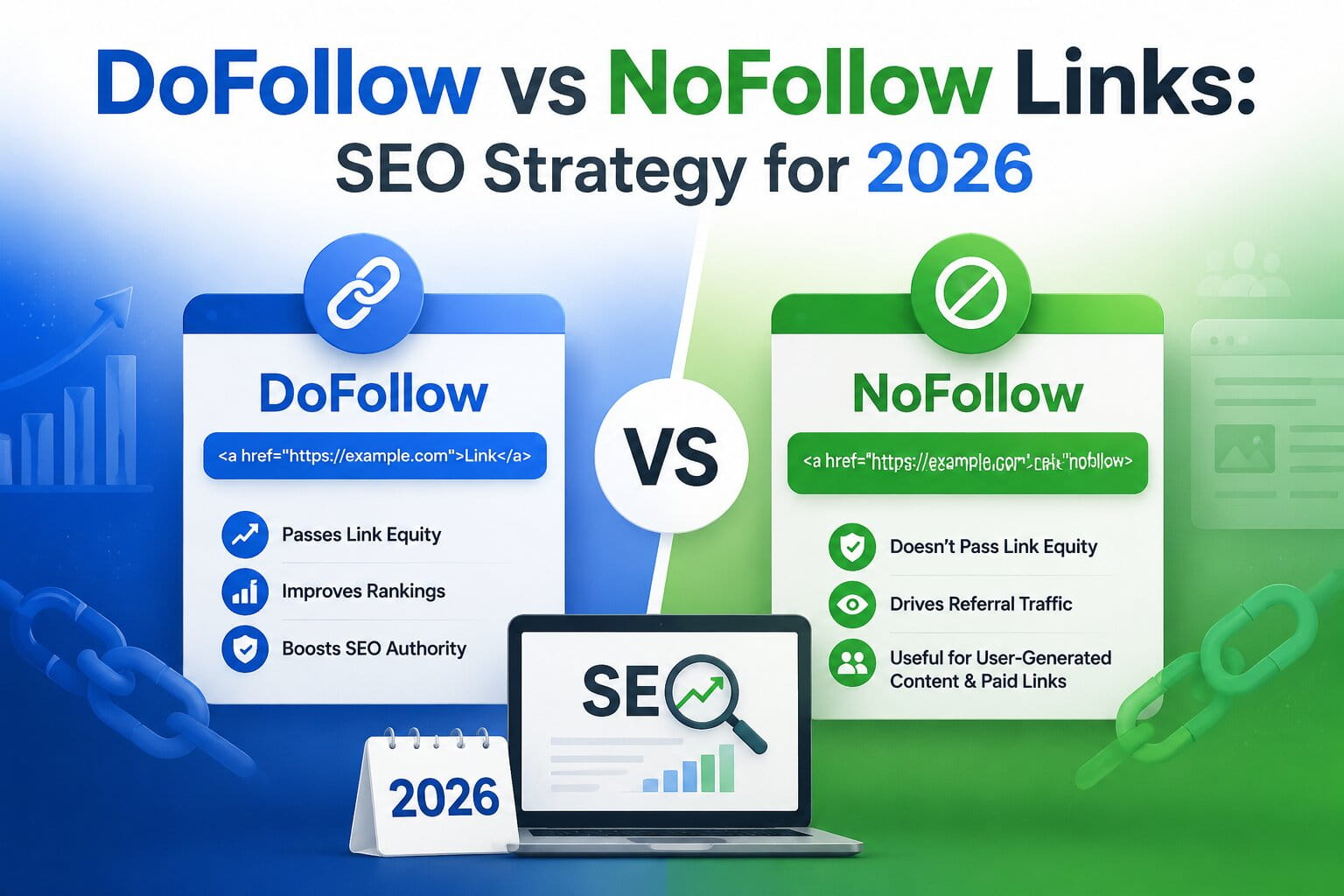
In many public link-building communities, Do-follow links are like gold, and rel=”no-follow” tags are like viruses. Website owners who visit a potential partner’s site and see a no-follow tag often cancel the deal immediately.
They always believe that if it doesn’t pass ‘link juice’ or increase their third-party metrics like Domain Rating (DR), it’s a complete waste of time.
So, don’t obsess over do-follow links. It will not only hinder your website’s growth but also expose it to algorithmic penalties. In case of building an efficient, future-proof off-page SEO strategy, we need to reexamine how we value link exchanges and understand the hidden power of the no-follow tag.
The Danger of the 100% Do-Follow Link Profile
Now you have to understand why no-follow links are so important; In this case, you have to get knowledge about what Google’s spam algorithms are actually looking for.
Now, think about how the internet functions organically. When users, journalists, or content creators share various types of links naturally, they rarely think about HTML tags. For example:
| Platform / Source | Action / Scenario | Link Type |
| A user posts a link to your guide in a busy thread. | No-follow | |
| Twitter or LinkedIn | A fan shares your latest blog post. | No-follow |
| Wikipedia | A volunteer editor cites your original research on a page. | No-follow |
| Major News Outlet | Links to your tool using a standard linking system that deprives links of all link equity. | No-follow |
So, a natural, organic digital footprint is messy. There are do-follow links, no-follow links, and unlinked brand mentions. Everything is important.
Let’s look at it from Google’s side for a second. Imagine their algorithm lands on a new site and finds 500 backlinks. Every single one is a pristine, do-follow link with perfect anchor text.
Does that look like real people naturally sharing content? Not a chance. It’s a massive red flag.
Having a 100% do-follow link profile practically screams to search engines that you bought or manipulated your links. Real life is messy. If your backlink profile looks like a perfectly controlled science experiment, you are going to trigger the spam filters.
This is exactly where no-follow links save you. They act as a shield, bringing a natural, organic balance to your site. It’s kind of ironic—having those no-follow links is exactly what makes your hard-earned do-follow links look completely legitimate to Google.
The Evolution of the “No-Follow” Hint
Lots of people panic about no-follow links. Because they’ve been given outdated SEO advice. When Google added the no-follow attribute in 2005, it was the only rule, nothing else. It was designed to eliminate spam comments from blogs. If a link contained the tag, Googlebot ignored the link completely. It didn’t crawl it, and it passed zero PageRank.
But search has also gotten much more complicated day by day. On March 1, 2020, Google officially changed its definition of the no-follow tag from a directive to a hint.
So, what does this mean for website owners today?
Basically, when a trusted and authoritative website links to you with a no-follow tag, Google does not just close their eyes. They examine the context. Google analyses the topic of the linked page, the authority of the domain name, and the quality of the text surrounding it. Then they use that “hint” to create a conceptual map of your site’s relevance.
A relevant, contextual no-follow link from a leader in your industry is worth 10x times more to your authority than a fake do-follow link hidden on a fake Private Blog Network (PBN). Third-party vanity metrics can be easily faked; true contextual relevance cannot.
Referral Traffic: The Ultimate Ranking Signal
Think about why you built your website. Your goal isn’t to impress a third-party SEO tool but to attract real people who read your content and connect with your brand, and ultimately become your customers or subscribers. Right?
Honestly, this is the biggest problem with the “do-follow or nothing” attitude. You get so hyper-focused on a tiny HTML tag that you completely miss out on massive waves of real traffic.
Consider this real-world comparison. You are offered two distinct link placements:
Placement A: Let’s say you get a guaranteed do-follow link on a generic blog. The DR looks decent at 45, but if you look closely, the actual content is just automated garbage. It barely gets 50 visits a month, and no real humans are actually reading it.
Placement B: On the other hand, you land a no-follow link inside a super active, tightly moderated community forum. Thousands of real people in your exact niche are logging in every single day to ask questions and share real solutions.
The metric-obsessed website owner chooses Placement A. They lock up their tag, their DR metric goes up by one point, but their business loses nothing.
Any smart SEO goes with Placement B. Forget about PageRank for a second; this link does something infinitely better. It drives highly targeted traffic straight to your website. Actual humans read that forum thread, click your link because they genuinely care about the topic, and land on your page. They spend five minutes reading your guide, bookmark it for later, and start clicking around to see what else you have.
That kind of targeted referral traffic can create real SEO and business value over time. When the right people visit your site from a trusted, niche-relevant source, they are more likely to read your content, remember your brand, explore your services, subscribe, or become customers. Even if the link is no-follow, the placement can still support brand visibility, trust, audience growth, and long-term search performance.
Entity SEO: Building Brand Trust Without “Link Juice”
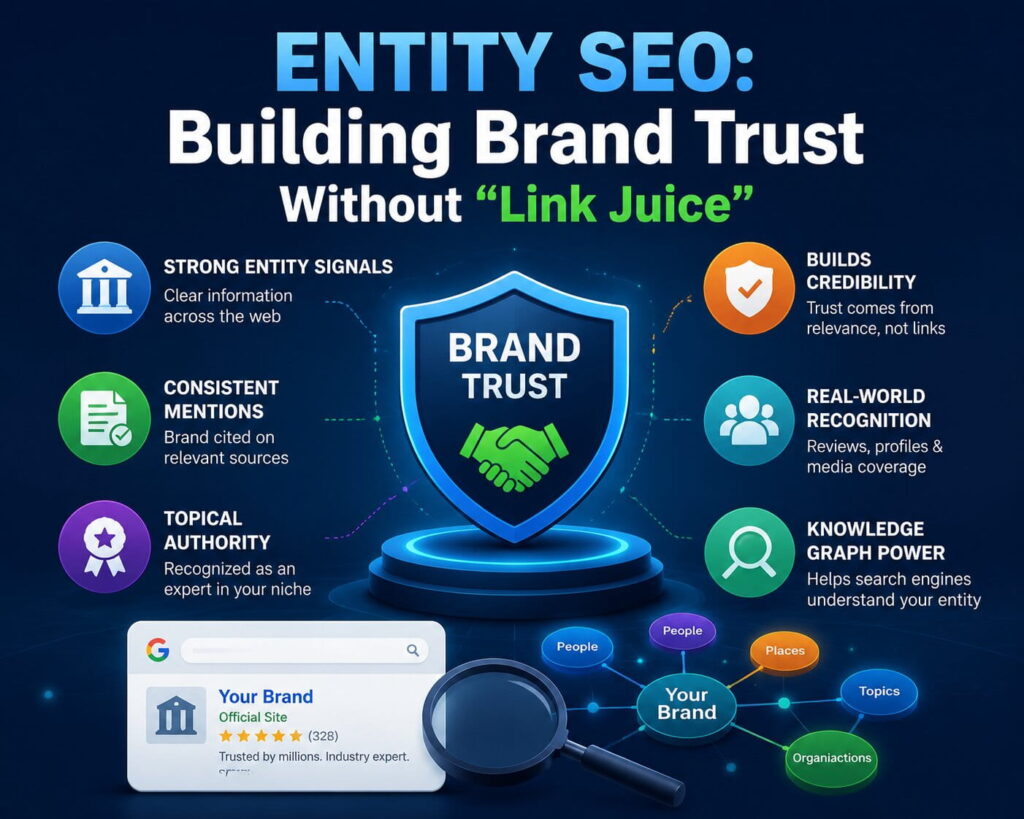
If you want to know where SEO is going, look at Entities. Entities are the future of search engine optimization. Google uses Natural Language Processing (NLP) to read the web like a person, recognising unique concepts, brands, and relationships rather than counting links.
Your brand is an entity. Think about what happens when a massive site in your industry mentions your name, even if they completely forget to drop a link. Google’s algorithms still pick up on that context. They read the words surrounding your brand name, connect the dots, and recognize you as a legitimate player in that space.
Now, what happens if they actually add a no-follow link to your name? It completely amplifies the whole signal. It might not send raw PageRank your way, but it proves your site is connected to a highly trusted source. It builds up your “Topical Trust.” Basically, Google sees that the big players in your niche care about what you’re doing. Once you build up that kind of entity trust, ranking for your big money keywords gets significantly easier.
How to Evaluate Link Exchanges in 2026
Does this mean you should completely stop looking for do-follow links? Definitely not. They are still an important part of a successful SEO strategy. What is important is to make sure that the HTML tag is not all you focus on.
The next time you’re reviewing a potential link exchange, stop staring at the source code for a minute. Instead, run the opportunity through these four basic, human-centered filters:
- Is there a real overlap of users?
Let’s say you run a SaaS tool for remote teams. Getting a link from a pet care blog is completely useless, even if it’s a do-follow link on a DR 80 site. The relevance just isn’t there. You need to focus on collaborating with sites where your target users are actually hanging out.
- Where should the link be placed?
If they’re just going to bury your link in the footer or dump it on some obscure “Partners” page, walk away. You want contextual links. It needs to be woven naturally into a piece of content that actually gets real eyeballs.
- Is there any real human life on the site?
Look past the SEO metrics for a second. Does the site look like someone actually cares about it? Read an article or two—are they actually good? Do they get real comments, or is it just a ghost town? Honestly, getting a placement on a smaller site with a tight-knit, engaged following is often way better than a link from a massive, soulless blog.
- Would a real user click the link?
Be brutally honest with yourself here. If you were just casually scrolling through that article, would the anchor text actually make you want to click? If the sentence reads awkwardly or the link feels forced to you, trust me—Google’s spam filters are going to see it the exact same way.
If your potential partner site passes these four tests, you should proceed. At that point, it honestly doesn’t matter if the final link gets tagged as do-follow or no-follow. You just secured prime digital real estate on a thriving, relevant platform in your industry, and that is always a massive win.
The WebSEO.club Advantage: Communities Over Cold Emails
Seeing this change in search engine rankings is an example of how aggressive cold email link building is fading. Spamming hundreds of inboxes with do-follow link requests just doesn’t work anymore. People see right through it.
That’s why communities like WebSEO.club are such a game-changer right now.
Instead of begging strangers for links, you’re stepping into a vetted space to build real partnerships. You’re not just trading links; you’re connecting with real founders and creators who actually care about growing their sites sustainably.
WebSEO.club is a community where partnerships can happen naturally. You might land a massive do-follow feature article today, and get a no-follow shoutout on a heavily trafficked resource page tomorrow. And here’s the truth: you absolutely need both to build a truly bulletproof, natural backlink profile.
So, stop agonizing over vanity metrics or trying to engineer the perfectly balanced link ratio. Put your energy into building actual relationships, chasing real human referral traffic, and letting your brand’s footprint expand the way it’s supposed to. That’s the only real playbook for long-term SEO success.