


Topical authority is easier to build when a brand stops publishing in isolation and starts building with people around it. Community collaboration turns content from a one-way message into a living system of ideas, examples, and proof, which is exactly what modern SEO and brand growth reward. The real advantage is not just more content – it is better content, faster iteration, and stronger relevance around one clear topic.

Community collaboration is not a support tactic anymore, it is becoming the engine that helps brands create depth, scale content, and earn trust faster.
Why community collaboration changes the game
A solo content strategy usually depends on one perspective, one workflow, and one internal set of assumptions. That can work for a while, but it tends to plateau because the site keeps repeating the same voice and the same angles. Community collaboration breaks that pattern by bringing in contributors, users, partners, and niche experts who expand the topic in ways a single writer often cannot.
The result is a stronger content asset. Instead of an article that merely explains a subject, you get an article that reflects how the niche actually thinks, solves problems, and talks about the issue in real life. That makes the piece more credible, more useful, and more likely to get referenced or shared later.
Community as a content engine
Proof Case
The biggest shift is this: community is no longer just an audience. It is a built-in source of ideas, proof, and topic expansion. When you look at it that way, collaboration becomes a repeatable growth system instead of a one-time content boost.
A good community workflow can turn one discussion into multiple assets:
- A question becomes a guide.
- A guide becomes a checklist.
- The checklist becomes a case-based post.
- The case-based post becomes a follow-up discussion or roundup.
That is how content scales without becoming thin. You are not forcing the same idea into different pages; you are letting the community reveal what the next page should be.
What topical authority really looks like
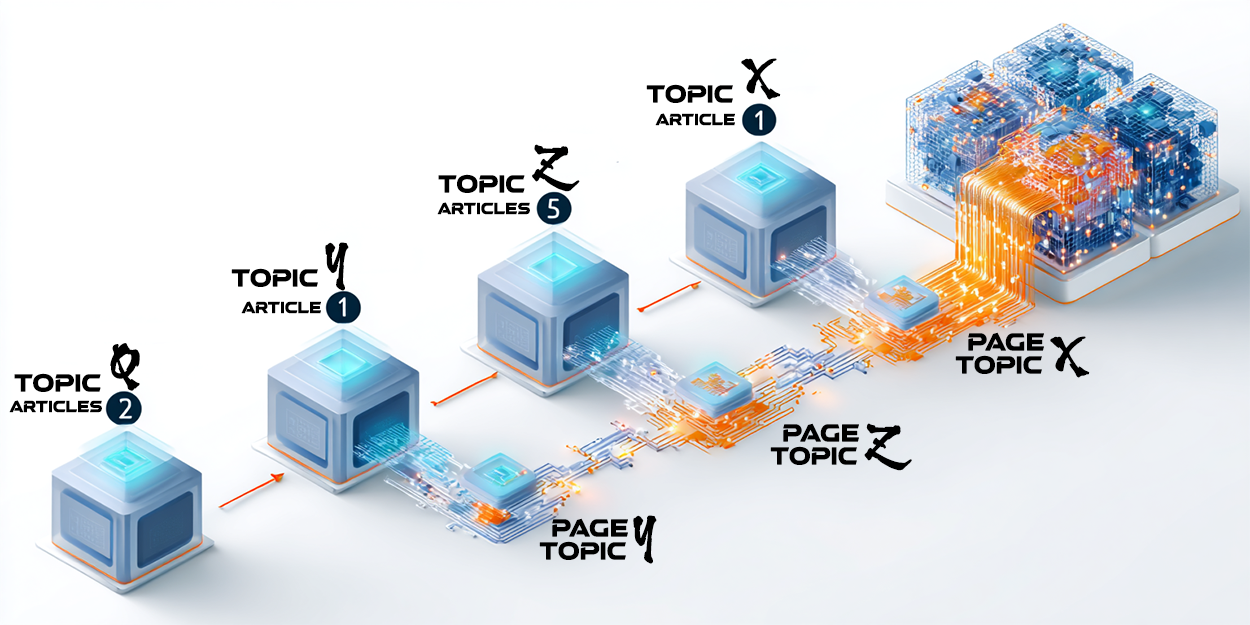
Topical authority is not about one page ranking once. It is about creating a content footprint that signals, again and again, that your website is focused on one subject and has something meaningful to say about it. Over time, that becomes a brand-level advantage.
Think of it like this:
- One article = a single opinion.
- Five related articles = a pattern.
- Ten connected articles with community input = a recognizable source.
Authority compounds when every new article reinforces the same subject, the same standards, and the same audience intent.
A strong example is the way larger content brands organize information into pillar pages, supporting articles, and internal link paths. That structure helps readers move through a topic naturally and helps the site present itself as a deep resource rather than a random collection of posts.
Why collaborative content builds authority
Topical authority is built through repeated proof. A website earns it when the content cluster keeps showing depth, consistency, and real understanding across the same subject area. Collaboration helps because it adds proof from outside the brand itself, which makes the topic feel less manufactured and more established.
A site becomes harder to ignore when its content reflects a whole ecosystem of insight instead of one company talking to itself.
This is also why content clusters work so well. A pillar page gives the topic a home, and supporting posts expand the subtopics underneath it. Community collaboration gives that cluster more fuel because it reveals which questions matter most, which examples feel real, and which subtopics deserve their own page.
That process makes the site look active and relevant. It also increases the chances that people inside the community will link to, mention, or share the content because they see themselves reflected in it. A link earned through participation tends to feel more natural than a link placed just for SEO.
How collaboration strengthens content
The practical value of collaboration is that it improves the content before it ever goes live. It can uncover missing angles, add sharper examples, and make the article more grounded in actual experience. That is especially important if your goal is to build authority rather than just publish another SEO post.
A strong collaboration process usually does four things:
- Surfaces questions the internal team would have missed.
- Adds quotes, opinions, or examples that make the article feel real.
- Creates natural link building opportunities across the topic cluster.
- Gives the brand a reason to revisit and update the content later.
That last part matters more than people think. A collaborative content system is easier to refresh because it already has a network of ideas around it. Instead of starting from zero, you keep building on the same theme with new input.
A simple proof model
One way to think about it is this:
- Single brand article = one perspective.
- Collaborative article = multiple perspectives.
- Collaborative topic cluster = repeated proof.
- Collaborative cluster with updates and follow-ups = growing authority
That progression matters because authority is cumulative. Search engines and readers both respond better when they can see that a site keeps returning to the same topic with more depth, more relevance, and more evidence each time.
Big-site logic
Larger brands already use this model, even if they do not call it community collaboration. Their content strategies often rely on pillars, clusters, recurring subject areas, and internal links that make the site feel organized and expert-led. HubSpot is a clear example of how structured content can reinforce authority over time.
The important takeaway is not to copy big brands mechanically. It is to understand why the model works: they do not treat content as isolated posts, but as a connected system that builds trust and category ownership. Community collaboration gives smaller and mid-sized brands a way to do the same thing with more authenticity and less overhead.
That progression matters because authority is cumulative. Search engines and readers both respond better when they can see that a site keeps returning to the same topic with more depth, more relevance, and more evidence each time.
Why this scales better
Community collaboration scales better because it distributes the work of insight. You are not relying on one person to invent every angle, write every proof point, or find every example. Instead, the community helps generate the raw material that turns into better pages, stronger clusters, and more natural authority signals.
That is why this model is attractive for brands that want to grow without sounding repetitive. It lets you publish content that feels more human while still staying strategically organized around one subject. Over time, that balance is what turns a content hub into a recognized source.
Community collaboration is one of the most practical ways to build topical authority because it combines depth, relevance, and proof in a way solo publishing usually cannot. It helps brands uncover better ideas, create stronger content clusters, and stay closer to the real conversation happening inside their niche. That is what makes it valuable for both SEO and long-term brand growth.
If authority is the outcome, collaboration is becoming one of the smartest ways to get there.